.
Showing posts with label system. Show all posts

Tuesday, May 10, 2016

The Three Commandments of the Successful Forex System Trader ~ forex trading jobs in india

0

Very often people will ask me what is needed to achieve some success in automated trading. I get asked if it is actually possible to live "making money while you sleep" and to exploit market inefficiencies as the market changes. Often people I explain my line of work to are extremely skeptical. For example a person I met a few weeks ago at my sisters wedding asked how this was possible and that if this was possible, why isnt everyone making a profit from the forex market. Oh well, it certainly is useful when you talk to people who have absolutely nothing to do with trading - as a matter of fact - I had not found myself in such a difficult position to explain something for quite a bit of time. In the end, I told her that - in analogy with getting to heaven and the ten commandments - people do not succeed with the use of automated trading systems because they do not follow some very simple principles. I explained to her that there are simple rules that need to be followed when you trade these systems and that deviations - even if only small - can end up making a person fail to achieve the ultimate goal of long term profitability in automated trading.

On todays post I want to talk to you about these "three commandments" I explained to her and why each one of these simple rules is absolutely vital to get success in trading, specifically with mechanical trading systems. Of course, some of you may disagree and some of you may agree but in the end these are the rules I have found to work for me and what I believe "raises the bar" so that only a few traders are able to get to this point. Evidently I have not been enjoying this position for decades and therefore I am still tempted and strive to stay with my "three commandments of the mechanical system trader", hopefully following these three seemingly simple - yet very complex rules - will keep me in my way towards a few decades of forex automated trading profitability :o). Do you want to know more about these rules and whether or not they apply to your current situation ? Keep reading to find out !

1. You shall understand what you are doing. Perhaps this eliminates most of the people out there who are currently wanting to become profitable in the long term using these systems. Understanding is a vital part of success and achieving a profitable position in automated trading will simply not be possible - from what I have seen and experienced - if you do not perfectly understand everything you are doing, the systems you are using and how automated trading works. Understanding needs to be deep and should NOT be merely superficial. Understanding should cover deep knowledge about your systems logic, the inefficiency exploited, etc. If you have not gone through at least a few years worth of trades of the system you are trading in a trade by trade basis doing a trade by trade in-depth analysis then you still need to go a long way before you can consider that you truly know what you are trading. In the end, any effort you wont do is an effort somebody else will make and that someone will take your place as a profitable mechanical trader. So if you want to avoid efforts, this is not the place to be.

2. You shall know what to expect. After knowing what you are doing comes to know what you should expect. Traders who are successful using automated trading systems know exactly what to expect from their systems, they know all the characteristics of the systems they trade and precisely what their predicted draw down and profit periods are like. People who understand their automated trading systems and analyze them extensively know the accuracy of their simulations, the length of profit and draw down periods and all other characteristics of systems. Again - as with understanding - we are not talking about a superficial understanding of what to expect. Anything that happens with your system that you do not take into account within your plan will make you unsuccessful so you have to be prepared for every possible case. What if your system reaches a draw down deeper than the simulations ? what if the system has double the number of predicted consecutive loses ? You should know what the meaning of these events are related to your systems performance.

3. You shall evaluate your systems. The last commandment of the successful mechanical trader is to evaluate. You cannot be successful if you trade a system with blind faith - because every system can fail - and continuously evaluating the performance of your trading system and the current market conditions is of incredible importance to achieve success. Knowing when a worst-case scenario will be reached, if the current draw down cycle is too long, if the system is now too risky to be traded, etc is one of the most important aspects of successful mechanical trading.

For people who read this blog who are also Asirikuy members the three above mentioned commandments may have sounded very familiar as I refer to them continuously within the Asirikuy website videos as the Asirikuy mantra : understand, expect and evaluate. From my experience these three simple things are the only actual skills you need to be a successful system trader. You simply need to understand, know what to expect and evaluate performance.

Of course, easier said than done :o) Maybe the first point seems to be the hardest - and it probably is- but the second and third are NOT any easier. Knowing what to expect from a system requires extensive analysis and it requires you to have a very clear understanding about the role and limitations of simulations and the whole way in which the system changes as market conditions start to develop, not to mention a deep understanding of system cycles, their extent and composition. Evaluating is also not very easy to do since it requires the confidence to run your system on live accounts and to weather the profit and draw down cycles trusting your expectancy analysis to be right.

My advice for you is therefore extremely simple. If you want to be successful in automated trading, follow the above three rules and I can guarantee that you will - at least- get to the point where I am today :o). If you would like to learn more about my journey in automated trading and how you too can build and trade your own automated trading systems based on sound trading tactics please consider buying my ebook on automated trading or joining Asirikuy to receive all ebook purchase benefits, weekly updates, check the live accounts I am running with several expert advisors and get in the road towards long term success in the forex market using automated trading systems. I hope you enjoyed the article !

forex trading jobs in india

Read more

Monday, May 9, 2016

Watukushay No 5 An Excellent System Ready for Release ~ forex trading gambling

0

After a few months of testing and development I am glad to announce that the first release candidate for Watukushay No.5 is ready to be traded. Some days ago I talked about the first beta release and how I wanted to explore community based development before releasing the EA and after some limited success with this idea I have found enough profitable results for this system as to release the EA to all Asirikuy members. The release candidate of Watukushay No.5 will be ready for live trading featuring adequate error handling and functional decomposition with high-quality code that will allow us to have reliable and well-executed live trading results. During the next few paragraphs I want to share with you the importance of Watukushay No.5s achievements, a little bit about what I was able to achieve with this system and what it represents to the Asirikuy community.

As I mentioned on the previous post about this experts beta, Watukushay No.5 is a universal daily breakout system that is able to enter the market on a wide variety of circumstances adapting itself to the inherent characteristics of each different daily breakout it enters. Watukushay No.5 therefore belong to the same family as the turtle trading system and Kutichiy, aiming to profit from directional movements by entering the market after a given price value is broken towards the same side. However, Watukushay No.5 also includes a "fade mechanism" which also allows it to trade against breakouts and increases its flexibility to be profitable on currency pairs where fading certain movements is more profitable than trading the breakouts.

When I released the beta I had found the first EUR/USD profitable settings and I had some preliminary results for other currency pairs. Right now I am proud to say that I have reached profitable settings for this EA on the EUR/USD, USD/CHF, USD/JPY and GBP/USD. This is important since we only have a few systems that are able to trade the 4 majors and Watukushay No.5 will be able to introduce a lot of diversification power through its results on different currency pairs. Adding to this is the fact that the most profitable results (achieving a higher than 2:1 average compounded yearly profit to maximum draw down ratio) belong to the USD/CHF currency pair and NOT to the EUR/USD, giving us the power to diversify greatly against other trading systems like Teyacanani and Watukushay No.2 which achieve excellent results on this currency pair.
-
-
Perhaps one of the most important things about this EA is its ability to constitute a viable portfolio on its own. The above image shows you the equity curve with yearly balance restarts (meaning that the internal balance of each instance is reset to the general account balance every 12 months) for Watukushay No.5 when trading the 4 majors at the same time. during the past 10 years. The portfolio of this EA achieves an average compounded yearly profit of 44% coupled with a maximum draw down level of 16% an excellent result only achievable up until now with a few other portfolios.

Despite the fact that all instances trade the same system it seems that maximum draw down periods do not tend to overlap since the different currency pairs are able to exploit their particular breakout inefficiency only under select market conditions that rotate amongst them. This in turn allows the different instances to hedge their draw down periods and achieve the above mentioned results which show this to be the case. Below you can also see the monthly profit chart for the portfolio obtained with 10 year backtests and a 1 year balance restarting technique. The system shows a high population of profitable months with a good number of highly profitable months that ensure the portfolios draw down remains under control. It is also worth mentioning that Watukushay No.5 was developed with all Watukushay Project principles in mind. The system was therefore developed with great care so that reliable simulations could be achieved.
-
-
In summary, Watukushay No.5 is a great addition to Asirikuy featuring profitable results with similar draw down and profit targets on the 4 majors, a milestone achievement for Asirikuy portfolio system development. The system also showed excellent portfolio results, reason why its contributions to our long term profitability are bound to be important. Right now I have opened a poll within the Asirikuy community forum to choose a name for this EA and when the name is ready I will release the systems live trading version coupled with at least 2 account for live testing within Asirikuy.

If you would like to learn more about my journey in system development and how you too can develop your own likely long term profitable systems based on sound trading tactics please consider buying my ebook on automated trading or joining Asirikuy to receive all ebook purchase benefits, weekly updates, check the live accounts I am running with several expert advisors and get in the road towards long term success in the forex market using automated trading systems. I hope you enjoyed the article !

forex trading gambling

Read more

Sunday, May 8, 2016

Broker Conspiracy Theories Are they True ~ forex trading get rich quick

0

If people new to forex trading have anything in common it is the overwhelming belief in the broker conspiracy theories. Ask ten people on their road to become successful traders about what they think regarding forex brokers and they will tell you that the main reason (or one of the main reasons) why they cannot profit as much as they want is because their brokers "play with them" in such a way that trading profitably becomes impossible (or much harder at least). The reasons why there is such a widespread belief in the broker conspiracy are many but the real question to ask is, is this conspiracy real ? Do brokers willingly play with their customers and mess with their execution and accounts in such a way that profitability is removed ? On todays post I will talk about these issues, giving you my opinion about the broker conspiracy theory and the consequence this has on your trading.

You have just bought your first extremely profitable scalping system, simulations show great results (although they are unreliable for this type of systems), your demo account shows great results and you are ready to jump into a live account with your first forex broker. You open up the account, fund it, get your VPS and start to trade your EA only to notice that your demo and live accounts almost never agree and your demo account is taking almost twice as many positions as your live trading account. Upon checking your live account you see a lot of spread widening, re-quotes and slippage that makes you think : the rumors were true, my broker is messing up my execution.

To tell you the truth, I do not believe in broker conspiracy theories because it is not in the main interest of a broker to harm their customers performance due to the fact that they make money from the spreads and this means that the longer it takes for a customer to lose their account, the more money they make. Generally what people perceive as their broker "messing with them" is nothing but the harsh reality of trading in the real market. Sometimes if the broker is a "market maker" this may become a little bit shady since the broker may make some decisions to protect itself from quick positioning or scalping, which they do not like due to the fact that they cannot properly hedge their exposure when such small and fast positions are opened. Such decisions may include spread widening, re-quotes, etc.

I have had my fair deal of experience with people in the broker industry (well known brokers at least) reason why I can tell you that most of the things you hear about are nothing but myths. Brokers are not "evil market makers" making money when you lose money, that to me seems like a childish way of putting things such as the brokers are "the bad guys" and you become the poor good guy/gal who could only make it if he or she wasnt screwed as much by the big guys. The first thing you need to do here is to take responsibility for your profits and your losses. Forex brokers are not responsible for your opening and closing of positions and therefore the fact that you attempt to use systems that simply dont work under real market conditions is not their fault.

However I always believe that you should always work with the worst possible case available such that your trading and decisions are as robust as possible. If there is a broker conspiracy and brokers will relentlessly prosecute and make certain systems (like scalpers) totally nonviable then you should focus on trading a system that is shielded from the power your broker has over your trading. Certainly it would not be very intelligent to trade a given system that you know depends greatly on execution variables your broker controls. If brokers do seek to make traders lose, then why in the world would you want to make it easier for them ?

In the end, if you profit or if you dont depends entirely on the decisions you make. If you trade systems that are very vulnerable to your brokers bidding then you will fall prey to the problems of real market execution and - if existent - to your brokers endless hunger for new traders flesh. As I said before the key here is to take responsibility for your trading and find systems that will allow you to trade with the smallest degree of dependency on live execution variables. Systems that trade in the medium or long term which do not have small take profit and stop loss targets will make you "immune" to any conspiracy since your broker will not be able to control your trading through the manipulation of execution variables.

However it is interesting here to note that I have never heard a profitable trader complain about execution related problems as a "broker conspiracy" since experienced traders know that this is a characteristic of the real market and that being successful despite their existence is one of the jobs YOU have as a profitable trader. It is irrelevant if these problems are or arent caused by your broker, if they are there and you want to be profitable then make your trading style such that these problems will have a small effect on your account balance. If you are suffering because of execution issues you should know that your trading style is what gives them the room to harm your wallet.

If you would like to know more about automated trading system development and how you too can design likely profitable trading systems please consider buying my ebook on automated trading or joining Asirikuy to receive all ebook purchase benefits, weekly updates, check the live accounts I am running with several expert advisors and get in the road towards long term success in the forex market using automated trading systems. I hope you enjoyed the article !

forex trading get rich quick

Read more

Thursday, May 5, 2016

Staying Single How to Avoid Falling in Love with Trades ~ forex trading income

0

When we embark ourselves in the incredible adventure that is trading, we quickly find that the worst obstacle to achieve our goals is nothing but ourselves. In all the years I have been trading I could tell you that most of the problems I have had have been caused by my own actions which have been a consequence of my - sometimes - irrational thinking. One of the worst ways in which I affected my own trading in the beginning was what I would call my "love affairs" with trades. When we start to trade we tend to make every position we enter too important because in the beginning we all generally lack focus and perspective regarding trading as a business. On todays post I will talk about this great problem I had when I started trading and I will share with you some of the things I did to "stay single" and avoid this disastrous experiences with my trades.

It was a sunny afternoon several years ago when I decided that everything was set. The stars had aligned, my setup had come true and I finally had a perfect EUR/JPY trade ready for entry. I entered the trade, entered my stop loss and take profit levels and waited for a few hundred dollars to go into my account. However, the market decided that the odds were against me and I was facing a position very close to my stoploss in a few hours. Then I remember that the EUR/JPY had done this to me before and I exit my trade only to find out I would have hit my TP after a few hours. My decision -based on this irrational thinking - was to give my trade "more room", I moved my stoploss to allow the trade to continue. Then it moved even MORE against me and it wiped my trade. I ended up losing almost 4 times what I had initially planed to lose and the position never bounced back to the level I had set as a TP.
-
-
This is only one of the several examples of times in which I fell in love with a trade and refused to let it go. The consequence was not only a significant financial loss in my account but a feeling made up of frustration and anger that had a snow ball effect that made me revenge trade the market and end up at an even worse point. When you trade like this you are operating your business like a 5 year old, good things - profitable trades - make you very happy and euphoric while bad things - losing trades - make you absolutely frustrated and angry. It certainly took me a few months but I finally realized that this was a recipe for total disaster.

To change this is no easy thing because the present - the trade on your screen - has an inevitable effect on you psychologically. It is extremely difficult to stay calm and trade your system like you were meant to trade it, to avoid intervention and to avoid feeling like a winner or loser based on some limited trading results. This was the most difficult thing I had to do to become a profitable trader to remove these emotions and become immune to the short term emotional effects trades had on me.

How did I do it (and continue to do it!) ? What worked for me was simply to change my perspective from a short term look to a long term look. I realized that trading wasnt working for me because I was too focused on short term results (turning a profitable trade today) rather than on long term results (obtaining a good average yearly return). My strategies and trading didnt have any long term focus and this was the reason why I wasnt getting anywhere. I decided that if this was going to work for me I needed to have long term targets and I needed to know exactly how my systems would perform in the long term. How long and deep their draw down periods were, how many losing trades I could be expecting, etc.

The change here was from night to day. When I started to have a long term outlook on trading as a business and I had a clear perspective on the way my systems worked, understanding why they were going to be most likely successful in the long term and when exactly I needed to stop trading them if they werent was a blessing to my trading career. Losing trades just became a characteristic of my systems and intervention became a clear thing to avoid since it was obviously detrimental to my systems results. I became a very cold-minded trader and I have successfully managed to avoid "falling in love" with my trades.

To me a trade right now is simply a very small part of what constitutes my long term goals and therefore it simply makes no sense to get happy or sad about the outcome of any single one of them. Certainly if you are a new trader my advice for you is simple, write down a plan that is extremely clear and that has all the detailed characteristics of your trading system laid out (draw down periods, expected loses, expected profits, etc). Know exactly what you are getting into and gain a LONG term perspective into your trading. Treat your trading like a business with long term goals and you will gain an amazing level of control and discipline that will put you on your way to become a profitable trader.

If you would like to learn more about automated trading and how you can use automated trading systems to improve your trading abilities please consider buying my ebook on automated trading or joining Asirikuy to receive all ebook purchase benefits, weekly updates, check the live accounts I am running with several expert advisors and get in the road towards long term success in the forex market using automated trading systems. I hope you enjoyed the article !

forex trading income

Read more

Five Common Mistakes in System Optimization ~ forex trading jobs in new york

0

I believe that one of the most important aspects of system design and use is system optimization. This step in system design is vital since it allows us to adjust a given trading system so that it can more efficiently exploit the market inefficiency it is based on. When done correctly, the optimization of a trading system gives you a more profitable version of your logic with better profit and risk targets in long term performance and a very robust strategy which is not likely to fail even if market conditions change significantly. When done incorrectly, optimization leads to curve-fitted systems which are "fit" to test profitably in the past but fail to profit in the same way in the future. What is the difference between correct and incorrect optimization ? On todays post I will talk to you about this very important aspect of system design and what mistakes system designers and traders usually make that make their optimizations invalid and the resulting trading system useless.

In the end, there is a good way and a bad way to optimize a strategy and definitely all systems can be adequately optimized if certain precautions are taken into account so that the most important "curve-fitting pitfalls" are avoided. I will now describe the five most common and dangerous mistakes made when optimizing and I will attempt to give some solutions to these very usual and sadly lethal blows to long term profitability.

1. Optimization period length. I think that the most common mistake when doing optimization is -without a doubt- the length of the testing period used to optimize. Strictly speaking, optimizations are not bound to be meaningful fit they are done within periods of less than 5 years given that smaller periods of time are not statistically relevant according to long term changes in market volatility. So if you want to optimize your system and avoid curve fitting, use a period of at least five years. Using a smaller period will most likely "fit" your strategy to very specific market conditions and will make it unable to perform correctly as the market changes.

2. Reliability of the simulations. It is very important to note that in order for optimizations to be valid, simulations need to be valid. Optimizing a scalper or a similar strategy which cannot be simulated accurately does not make any sense since the trading results - and thus the optimization results - are not going to represent live testing to any accurate extent. Designing systems that explicitely control one minute bar opening and that use adequate profit and risk targets - large enough to avoid interpolation errors - is critical for adequate optimization.

3. Ignoring the results surroundings. One of the most important aspects of system optimization is to take into account the results "around" the most profitable result you found. For example, if the optimal value for an indicator period for your strategy is 20 when doing a 5 year optimization what happens when the indicator value is changes to 19 or 21, what about 18 or 22 ? It is very important to consider the surrounding since they give you an idea of the possible changes of profitability you will get if the market changes enough so that your "optimal" settings are no longer that good. If your system is very profitable with 20 and then loses 70% of its profitability with 19, then the strategy is not robust enough and it IS bound to fail in the future as market conditions may drift - even if only slightly - from your set results.

4. Fine grid optimizations. Another common problem with optimizations is the use of very fine grids when optimizting. In general, the coarser the optimization the less risk there is to curve fit a strategy since the fitting is done in a "lose way" and results that may over estimate profits and underestimate future draw downs are also avoided to a good extent. In general you should not optimize to any grid lower than 2% and better 5% so if you are doing an optimization of a strategys SL from 20 to 200 do not use steps smaller than 4 to accomplish this.
--
5. Reoptimizing after Optimizing. When you optimize a parameter for given strategy, then optimize another one and then reoptimize the first one to the new profitable results you are most likely doing a sort of "fine grid" optimization in the sense that you are "fine tuning" the first variable to the seconds "best results". This is similar to doing a fully correlated optimization (although less computationally intensive) but it has similar dangers in the sense that increased correlation and probably further curve fitting is introduced. My advice here is to only optimize variables from a first set of parameters in order and avoid reoptimization of a variable after it has been optimized once.

As you see, these common mistakes in optimization are made by most people who want to improve their automated trading systems and all of them are bound to generate very good results using optimizations that are possibly going to be an over estimation of profit and underestimation of draw down in the long term. In a future post I will give you a diagram for optimizations explaining a little bit how I optimize my systems and what "general procedures" I follow so that my systems end up being robust, profitable and with a high like hood of maintaining their risk and draw down characteristics in the long term.

If you would like to learn more about my journey in automated trading and how you too can start to design and program your own likely long term profitable strategies please consider buying my ebook on automated trading or joining Asirikuy to receive all ebook purchase benefits, weekly updates, check the live accounts I am running with several expert advisors and get in the road towards long term success in the forex market using automated trading systems. I hope you enjoyed the article !

forex trading jobs in new york

Read more

Sunday, May 1, 2016

Steps to Design a Likely Long Term Profitable Trading System ~ forex trading legit

0

To tell the truth, making a likely long term profitable trading system is a very difficult thing to do. When you search online for people who attempt to design profitable trading systems you will find that most of them dont have a mechanical, well-thought approach to system design and the final achievements are usually based on an initial "thought" based on repetitive and almost constant modifications to eliminate short term draw down periods which are natural to long term profitable systems. In the end, the result is a set of dangerous systems - sometimes without even accurate simulations abilities - that will put account equity at a very important risk of long term total loss. On todays post I want to write a little bit about my steps in system design and the main characteristics of my mechanical approach to sound trading system development.

So where do we start ? You will see that most traders who have never coded a likely long term profitable system will start by coding a given entry logic found on a forum or studied briefly through limited demo trading or visual backtesting. What they do then is assign a fixed lot size to trading and some given - almost always arbitrary - stoploss and profit target values with no particular extensive study. What you get then is a system that has no possibilities of success and which is flawed from the beginning since it has no adaptation, no real sound studies behind it and simply not enough focus on money management (which is lot sizing plus exit logic). This is revealed when traders start to put these systems to the test but instead of looking at the development process as a source of the problem they usually end up adding unsound tactics - such as martingales - over optimizing their exit values, adding complexity to the entries and other things which in the end lead to the generation of a system - which is simply - very bad.

First of all, there are probably many ways in which successful system design can be approached. I am going to discuss mine because it has worked for me and has led to the generation of many long term profitable systems but you should use my approach only as a guide to develop your own way of tackling the system design problem, as something different may work better for you.

What are the necessary steps to successful system development ? I have prepared a practical diagram (click to enlarge) showing you graphically the process I take in order to develop trading systems - including all those within the Watukushay Project - and all other experts. You will see that the first step I take is a design of an entry logic followed by a mathematical expectancy analysis which defines the trading systems potential. If the mathematical expectancy analysis is not positive, then I modify the entry logic or the evaluated number of periods and time frame until I am able to achieve a positive value. Most people would be surprised to know how little importance the entry logic actually has as most entry mechanisms have some degree of positive mathematical expectancy on different time frames or periods. The problem with the usual system development tactic used by most new traders is that they dont do a mathematical expectancy analysis at all, therefore, they truly dont know the potential of their system or if it is being used on the adequate time frame or if they are targetting adequate profit and loss values per trade.
-
-
After doing this analysis - and having positive results - I continue to develop the systems money management which will be the KEY to the systems long term profitability. Using the previous mathematical expectancy analysis I figure out what exits (as adaptive TP and SL) and what time frame will be the most beneficial to my system, always taking care to use time frames and profit targets to preserve the reliability of the simulations being done. Defining an adaptive lot sizing technique which modifies positions against both balance and volatility is also vital to ANY trading systems long term success. Many people underestimate the HUGE importance lot sizing has, having a fixed lot size or adapting lot sizes against a fixed percentage of account balance is a death sentence for most trading systems.

The next steps are probably the most important and the ones new traders and most designers never do. You need to do a 10 year backtest and then a TRADE BY TRADE analysis of the results to design adequate internal exit logic mechanisms to increase the profitability of the systems. After you introduce a new trading logic you need to check if the expected payoff (which measures the relationship between profit and draw down) is increased. If it is not, then you need to go back to a TRADE BY TRADE analysis until you come up with a logic that works.

After you find a closing logic that increases the expected payoff you need to optimize variables in an uncorrelated way - one by one - with large steps to prevent any significant curve fitting that may happen (some variables however, like the SL and TP adaptive criteria, may be optimized in a correlated fashion). After this is done you need to evaluate your results and ask yourself if you are satisfied with the draw down and profit targets of your system. If you are, then you are done. If you are not, then you need to go back and analyze TRADE BY TRADE a 10 year backtest to come up with other closing mechanisms to increase profitability.

I believe that this approach, which attempts to increase system profitability through analysis and sound development is incredibly powerful at generating long term profitable systems. Usually people focus way too much on the potential of the trading strategy - the development of entries - when in reality very simple entries have very good potential and only the development of adequate exit mechanisms really guarantees that large profitability levels are achieved. If you see the graph, most of my efforts are around the development of profitability as only the initial mathematical expectancy analysis is devoted to potential.

In the end, profitable system development is NOT easy and requires many hours of hard work and development. Each analysis of a 10 year backtesting result can take me hours - sometimes even days - of work but in the end this analysis is absolutely necessary as it gives me the understanding necessary to implement good exit criteria that will bring my systems to new profitability levels. All this effort that goes into development also allows me to deeply understand my systems and trade them with confidence under very varied market conditions.

The above way of developing systems has allowed me to develop several expert advisors which show success on 10 year backtests and also on live trading accounts, adapting to changes in market conditions and tackling true market inefficiencies. If you would like to learn more about system development and how you too can develop your own long term profitable systems to achieve success in forex trading please consider buying my ebook on automated trading or joining Asirikuy to receive all ebook purchase benefits, weekly updates, check the live accounts I am running with several expert advisors and get in the road towards long term success in the forex market using automated trading systems. I hope you enjoyed the article !

forex trading legit

Read more

Simple balanced system ~ forex trading dallas

0

Current Forex trading system represents a well thought and very simple combination of indicators. Knowing what signal to look for with each indicator, provides a strong tip for good entries and exits. 


Time frame: Any.
Currency: Any.
Indicators: 5 EMA, 10 EMA, Stochastic (14, 3, 3), RSI (14, 70, 30) 


Entry rules: Buy when 5 EMA crosses above 10 EMA and Stochastic lines are heading north (up) and Stochastic is not in overbought position (above 80.00 level) and RSI is above 50. 


Entry rules: Sell when 5 EMA crosses below 10 EMA and Stochastic lines are heading south (down) and Stochastic is not in oversold position (below 20.00 level), and RSI is below 50.
Exit rules: when 5 EMA and 10 EMA cross in the opposite direction or if RSI crosses the 50 mark again. 


Source: forex-strategies-revealed

forex trading dallas

Read more

Forex Expert Advisors Turbo Robot an Unbiased Review ~ forex trading long term

0

Today I found out a new robot which has been recently released into the forex automated trading arena. This trading system - called turbo-robot - promises to deliver consistent profits with unrivaled profitability, low draw downs, diversification and overall, just awesome results. Within this post I intend to review this trading system, specially the evidence provided by the author and whether or not this evidence is able to backup the authors claims of profitability. I will also look into this evidence and through my analysis tell you if I think the system has the potential to be long term profitable. After evaluating all these different aspects of the strategy I will then conclude my review by telling you whether or not this trading system is worth buying and testing. Is the turbo-robot up to the challenge of forex automated trading ? Lets see.

The turbo-robot website starts with the usual speech telling you how most robots suck but this robot is the best you will ever find. The author points out that the problem is that people should look for consistent profits and not systems that just make profits and then wipe accounts. Then when we turn to look at the evidence this system may have to prove that it is actually profitable we find nothing but the usual faulted tests.

This forex automated trading system offers backtesting results as the only proof of profitability. However not only does the author only offer these tests but the statements from the tests are not actually shown so things as simple as the actual time period of the tests, the average risk to rewards ratio, maximum draw down, etc, become absolutely useless. Then we are faced with something even worse which is the fact that the modeling quality of the tests is not 90% but n/a. This means that the simulations are not accurate since either 1 minute data was not used for modeling or a lot of mismatch errors occur within the test.

The author then shows us a part of the backtests which are supposed to be a part of the graphs shown. We do find that the system has a very favorable 1:5 risk to reward ratio which is absolutely great for any trading system. However since we do not have access to the actual backtesting statements it becomes absolutely impossible to determine whether or not this is the average risk to reward ratio or just the outcome of a few trades.

There is also an additional problem pointed out by the people at project4x which say that the backtesting results are NOT reproducible and that actual reproduction with 90% modeling quality generates nothing but loses. I think that this not surprising given the fact that the tests made available by the author of the turbo-robot website do show an n/a modeling quality pointing out that the results shown by them are the result of errors introduced within the data (or the lack of accurate data) and therefore their tests are nothing but meaningless and useless.

I believe that the people who setup this website and put up the tests are either very ignorant of how automated trading systems work and how to run simulations or they are doing an elaborate and conscious effort to deceive buyers. In either case the lack of any investor access verified live trading results and the lack of back testing statements does point out that the sellers are not being fully open but absolutely dishonest with the websites visitors. In the end, the overwhelming lack of any reliable evidence and the absolute lack of completness and accuracy of the evidence presented I consider this system NOT worth buying or testing. In the future, I would recommend the people at turbo-robot to consider their audience less retarded and do their homework regarding proper backtesting and the ABSOLUTELY necessary posting of FULL backtesting statements and investor access verified live trading results. If they are not willing to risk their own money on their own "wonderful" system, why should you ?

If you would like to learn more about my teachings in automated trading and how you too can design and trade your own long term profitable systems based on realistic profit and risk targets please consider buying my ebook on automated trading or joining Asirikuy to receive all ebook purchase benefits, weekly updates, check the live accounts I am running with several expert advisors and get in the road towards long term success in the forex market using automated trading systems. I hope you enjoyed the article !

forex trading long term

Read more

Saturday, April 30, 2016

HLO2 with Automatic Robot Trading System ~ forex trading strategies

0

A new trading system launched. That is HLO2 with Automatic Robot Trading System:
HLO2-with-Automatic-Robot-Trading-System
You will have the opportunity to buy at low prices and sell at the highest price. The intelligence multi time frame candle strategy , overbought/oversold that was confirmed by trend market direction and it works together with trade area channel Indicator.

Robot-Trading-System

See how it works here.
Who can trade with the system?
Newbie: I already saved as a chart profile including template and setting. So what have to do is only to place files in the right folder and load the profile. Done. More questions,read a manual or you can contact us.
Professional Trader: There are several options provided on the indicators and EA. You can explore your own experiences with new setting and see the results. Trailing Stop, Lot size, Money management, nPips Open, nPips Close, Take profit, Stop Loss and more.

HL02 EURAUD automatic robot trading system:


Let your money work for you with " HL02 with Automatic Robot Trading System "


forex trading strategies

Read more

Thursday, April 28, 2016

Making Automated Trading Systems 6 Tips for Successful System Design ~ forex trading korea

0

One of the questions I get asked the most is how I come up with and design all my mechanical trading strategies. Several people have wondered how I device my simple criteria for systems and how such simple logic can indeed be successful under todays ever-changing market conditions. However, what fellow traders often dont realize is that my system design is based on some very simple principles anyone could follow to achieve success in automated trading. On todays post I want to give you - fellow traders and system designers - some tips about system design so that you too can benefit from my experience around this area of successful strategy production.

Within the next few paragraphs you will find some very practical tips to help you with you design successful automated trading systems. I am absolutely sure that these tips will help you overcome some of the most prominent obstacles in automated trading, avoiding the mistakes that condemn most people who embark on this journey to failure and frustration. So how can you improve your system design and come up with better and more likely successful strategies the next time you design an expert advisor ? Keep reading to find out !

1. Understand what your system will attempt to do. Most people who attempt system creation often dont understand what their system will be doing. It is not a matter of saying "it will be making money" or "it will follow an MA cross", it is a matter of understanding what the system will attempt to capture and why it has a fundamental reason to work. Having an idea of how the market works and how your strategy exploits an inefficiency of the market is vital for success.

2. Everything must make sense. I cannot tell you how many times I have come up with people who want me to help them program systems that have a ton of indicators they dont even understand. In order to be successful, absolutely every single thing you add must have a reason and the reasons must not be shallow, like "because it filters ranging markets", they have to be clear and mathematically precise. Something like "this indicators helps me detect when price has moved in X direction because the indicators mathematical meaning shows Y about price..." is more like it.

3. Analyze and analyze deeply. Often traders will attempt to design a system based on a few weeks of forward or live testing or even on just a few months of "visual" backtesting. I can never stress enough that analyzing and testing systems on a statistically significant period is vital for success. I always analyze systems for at least 2-5 years of historical data before I even consider the coding of strategies. Not only does this analysis provide me with information about the system but it also helps me understand the underlying reasons why it does or doesnt work.

4. Do a mathematical expectancy analysis of the entry logic. When you are making a new trading system you always need to know if your expert has potential and what time frame and type of trade your system will be capturing. Doing a mathematical expectancy analysis is vital to get this information. This allows you to know for sure which time frame your system works best on and it gives you a good amount of information regarding the probable successful of your trading strategy.

5. Have simulation reliability in mind. When you are designing your trading system you need to do so with simulation reliability in mind. Being able to carry out reliable backtests is very important when evaluating trading strategies and taking into account this factor when you are programming your system is vital for success. If you program your system with simulation reliability as a main concern chances are that the results you will get will be much more reliable and consistent with live trading results.

6. Have adaptability in mind. Many traders decide to code their strategies with fixed exit target values (like fixed pip values of a TP and a SL) something which is bound to bring your systems to failure as different market conditions start to develop. Considering adaptability from the beginning and including adaptability within your mathematical expectancy analysis is important to guarantee the long term success and profitability of any trading system. If you look at systems that have been historically successful, most - if not all of them - use some for of adaptive exit.

I hope that the above tips help those of you interested in system design achieve better success in your quest towards the development of a useful trading strategy. Obviously there may be other aspects worth considering but this - in my experience - are the most important to know if you want to develop a successful trading strategy. Do you have any other useful tips or information you would like to leave ? Perhaps some personal experience ? Just leave a comment and well discuss it together :o)

If you would like to learn more about automated trading system development and how you too can create likely long term profitable systems please consider buying my ebook on automated trading or joining Asirikuy to receive all ebook purchase benefits, weekly updates, check the live accounts I am running with several expert advisors and get in the road towards long term success in the forex market using automated trading systems. I hope you enjoyed the article !

forex trading korea

Read more

Monday, April 25, 2016

5x5 Simple System Strategy ~ forex trading documentary

0

Just look what this trading strategy has to say. Its a simple yet quite promising Forex trading method. Trading strategies like this can only be discovered through a long and determined observation of the price behavior.

To start:
Currency: ANY
Time frame: 1 day
Indicators: 5 SMA, RSI 5 Entry rules: Buy when the price crosses over 5 SMA and makes + 10 pips up, the RSI must be over 50. Sell when the price crosses below the 5 SMA and makes +10 pips down, the RSI must be less than 50.
Exit rules: not set.


It is a very very simple system, yet with quite impressive results.
Always remember to take actions/enter the trade only after the signaling candle is closed.
This Strategy or trading idea can be used to create more advanced trading version.

Source: forex-strategies-revealed

forex trading documentary

Read more

Thursday, April 14, 2016

Old Forex System that Still Work ~ forex trading hours

0

This is my old Forex System but it still works !


Hi pal,

Do you tired looking for the forex strategy that can make money continuosly ?, if you do , great you’re at the right place.
You can call me Prasxz , actually I’m a programmer who interested in FOREX technical analysis, after I loss amount of money in this business , I start to asking into my self , why every I enter the market , its always against me ?, is there any proven system outhere that can avoid me being loss?

This system is FREE OF CHARGE.

For example :

You’re trading GBP for 10 times , how many times you loose your trade ? and how many times you’ve got your profit ?
If the answer is 8 wins and 2 losses, then you’re at the right system that match your style , next question is , can you keep your system working in the next 20,40,60,80,... trading round ?
If the answer is yes, please stop reading this strategy and keep your system on your side..
If no, may be I can help you here..


I will give you a simple trading system that has proven gave me minimum 20 pips/day ..not bad isn’t it ? and I still use this system as you see this blog.
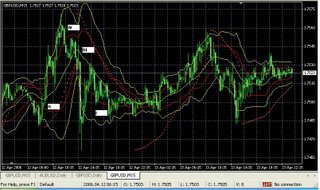
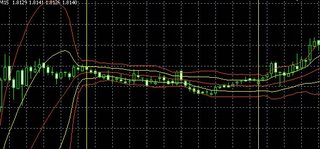
Let’s see below MetaTrader 4 picture for 15 m GBP chart.


I used only 2 indicators :

- 2 Bollinger Band with parameter :
Period : 20 Deviations :1 Apply to :Close
Period : 20 Deviations: 2 Apply to: Close
This 2 Bollinger Band divide the area into 5 lines

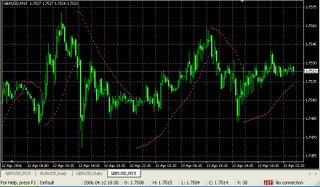
- Parabolic SAR (Stop and Reverse) with parameter :
Step : 0.01 Maximum: 0.2


Bollinger Band

These 2 Bollinger Band can tell you, where the market will go on the next stage.

If the bar from below touched the line V it means please be prepared for the reversal into line IV. (In case there’s no bullish signal from higher time frame)

If the bar from above crossed the line IV it means please be prepared for the bar touched the line III.

If the bar from above crossed the line III it means please be prepared for the bar touched the line II.

If the bar from above crossed the line II it means please be prepared for the bar touched the line I.

If the bar from above touched/crossed the line I it means please be prepared for the reversal into line II.(In case there’s no bearish signal from higher time frame).

There are the possibilities for the market move on 2 Bollinger Band stage, you can examine this indicators to make sure or perhaps backtesting and forwardtesting on Meta Trader 4.

Parabolic SAR


Use this indicators to determine the entry point and trailling stop.
PSAR strategy is BUY when the PSAR dot appears below the bar and SELL when the PSAR dot appears above the bar.

When the right time for me to BUY/SELL ?
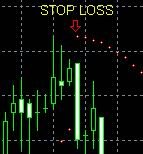
Where I placed my stop loss ?

You should take BUY position when the FIRST PSAR dot appears below the bar and take SELL position when the FIRST PSAR dot appears above the bar.
Term of FIRST here is very important because this is a good chance for you to take a maximum pips, close your position when you gain 10 – 30 pips or more perhaps depend on market situation.

Place a STOP LOSS at the first PSAR dot when you already enter the market and trail it into next PSAR dot.


How many pips I should place my stop loss ?

It depend on your style, if you willing to place stop loss for 20 – 40 pips you should use 15 minute chart to gain profit between 10 – 30 pips or more , use the higher time frame if you want to gain bigger profit and of course your stop loss pips will be increased...you can try it because this system works in all time frame, depend on your style and equity.

I’m convenience using 15 m chart because the smaller stop loss pips and it doesn’t take too many time to gain 10 – 30 pips / day.


STRATEGY

BUY whenever FIRST PSAR dot appears and the bar lies above line I or above line II , target is next line.

SELL whenever FIRST PSAR dot appears and the bar lies below line V or below line IV , target is next line.

You can take position in all line depend on market situation , the most important is you must action when the FIRST PSAR dot appears.


Use this system consistently, if you loose your trade, you must switch position in the next FIRST PSAR dot .

OK that’s it , cut your losses and let your profit run...

PS : I don’t have experience using C language ..if there’s somebody would like to make EA (Expert Advisor) in MT4 base on this system ,you can share with me.


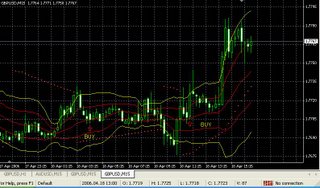
Case I :
hi all,
Ill show you about signal generated by the system, remember if the first PSAR appears and the price is at line V just wait until the price move back to line IV,III,II or I as long as the bar not touched the signalthen take position like below picture..


Case II

If you found ranging market or sideway trend like below picture ,you should wait and see till
long bottleneck end . Distance between line V and line I usually no more than 30 pips .


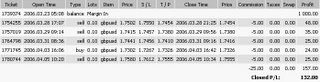
Below picture is sample of my balance sheet statement using this system...

forex trading hours

Read more

Wednesday, April 13, 2016

Why There is No Universal System Differences Between Currency Pairs ~ forex trading glossary

0

Can we build a system that trades successfully on all forex currency pairs ? This has often been a question of the automated trading system world that simply asks if there is a universal inefficiency, an inefficiency that is so common that it can be found an exploited on all different currency pairs. Up until now, the answer to this question has been a resounding and unequivocal NO. To the best of my knowledge no system has ever been developed to work on all currency pairs despite the claims of many system sellers who tell you that you can use their systems on all of them. But why has it been impossible to build such a system ? Why does trading all currency pairs seems like such a big challenge ? The answer lies within the very fabric of the market and the way in which the different currency pairs trade and react. Within the following paragraphs I will explain to you some of the basic aspects of these currency pair differences and why it makes the creation of any universal system extremely hard if not impossible.

You may have been told that inefficiencies in the market arise due to crowd behavior- which is a human characteristic- and that all currency pairs in forex show it to some degree. When you hear this it becomes easy to think that if a system "really works" then it is bound to work on absolutely all the instruments available in the currency market. After all, every instrument is bought and sold by humans and this would make them inherently inefficient.

Certainly if all instruments traded with the exact same number of people and with the exact same objectives we would be able to easily find a universal inefficiency but the matter of fact is that this is not the case. The first dramatic difference between instruments is the number of participants and the inherent liquidity of each currency pair. Some pairs like the EUR/USD are very liquid while others like the GBP/CHF dont have 1/10th of the liquidity of the former so their price action is dramatically different and the inefficiencies within it become dramatically different. The less people who trade a given pair, the more efficient it becomes since crowd behavior becomes less pronounced and individual decisions start to play important roles.

Then we have other differences that also make the movements of currency pairs different. For example if you are trading the USD/JPY and there is a negative trade balance against Japan then there will be a given fixed amount of money each month that will pull the USD against the JPY just merely because of business transactions that have nothing to do with speculation. The volume of these transactions is very significant and the time in which they are processed and their magnitude will have an impact on the way in which a pair moves.

Many other factors such as central bank intervention and even cultural differences play an important role in the way in which a pair moves when compared to another and all of these factors help to explain why the finding of universal inefficiencies is so hard. However when you look at higher time frames (daily and beyond) there seems to be some coherence and this is the reason why some systems that target month or year long trends manage to exploit the same inefficiency on several different currency pairs. However the success of these systems along the whole portfolio is never total and more often than not there are very strong differences between the profitability of different currency pairs and several pairs where the systems simply do not work.

So will we ever find a global and total inefficiency ? I would have to say that probably no, but if there is a chance it will take a lot more liquidity on all instruments and a lot more market participants to make this the case. Certainly in the future if the market volume on the illiquid currency pairs increases enough we might be able to have - even though not a truly universal system - at least systems that will have better success along different currency pairs.

If you would like to learn more about system development and how you too can build your own likely long term profitable systems based on sound trading tactics please consider buying my ebook on automated trading or joining Asirikuy to receive all ebook purchase benefits, weekly updates, check the live accounts I am running with several expert advisors and get in the road towards long term success in the forex market using automated trading systems. I hope you enjoyed the article !

forex trading glossary

Read more

Tuesday, April 12, 2016

EUR USD Simple System Strategy ~ forex trading desk

0

As we move forward we discover a strategy that fits only chosen currency pairs.
Take a look at the next Forex trading system:

Currency pair: EUR/USD.
Time frame: 30 min.
Indicators: MACD (12, 26, 9), Parabolic SAR default settings (0.02, 0.2)
Entry rules: When Parabolic SAR gives buy signal and MACD lines crossed upwards – buy.

When Parabolic SAR gives sell signal and MACD lines crossed downwards – sell.
Exit rules: exit at the next MACD lines crossover or if the market starts trading sideways for some time.


Source: forex-strategies-revealed

forex trading desk

Read more

Monday, April 11, 2016

Introducing Our New and Exclusive Profit and Draw Down Asirikuy Analysis Tool o ~ forex trading journal software

0

If you have read my posts during the past few months you will notice that I have become increasingly interested in the analysis of trading portfolios and the effect of trading several different systems together. After I was able to implement a solution that made the balance of Asirikuy experts independent it became possible to trade systems without their balance calculation becoming dependant on the other systems trades, something which in turn opened the door towards the merging of backtesting results to accurately evaluate joint performance of the different trading systems. Up until now all this analysis had been made through the use of SQL scripts and VBA macros which were implemented by several Asirikuy members. Thanks to their effort we were able to do accurate calculations on the draw down and profit characteristics of portfolios. However it became evident that these solutions to portfolio analysis were not very comfortable needing backtesting statement manual reorganization in excel followed by loading into an SQL server and then loading onto a separate excel spreadsheet to run VBA macros. For this reason we decided to start a project with an Asirikuy member (named Gábor) who offered some of his free time to do all the coding of this new draw down/profit analysis program. On todays post I have the pleasure to introduce this little Asirikuy-exclusive utility, our own profit and draw down analysis tool :o).
-
-
What is so great about this program, what does it do ? The program has many virtues that make it exceedingly good for backtesting statement analysis. The application allows us to load one or a series of backtesting statements joining them together automatically and calculating a series of very important characteristics which are not calculated on the metatrader backtester (not even the MT5 backtester). The program automatically calculates draw down periods, their length, their depth, yearly profits and monthly profits. Having all this information "a click away" is extremely important since it will allow us to do very fast Asirikuy portfolio analysis without having to through the cumbersome process needed to use SQL scripts for this purpose.
--
The image above shows you one of the main characteristics of this software, displaying the equity curve for the loaded backtests (in this case three) plus the addition of their results to show you the "portfolio equity curve". This instant snapshot of the equity curve is important since it allows you to see which systems were losers and which ones winners through the testing period you are evaluating. This in turn allows you to gauge the contributions to the maximum draw down and the overall risk level of the different systems, letting you know which system causes the most loses or profits.
-
-
The above picture shows you perhaps the most useful feature of the software, the ability to display draw down period lengths and depth of a given portfolio with great easyness. This allows you to know the average extent of draw down periods and how long you would have to be prepared to wait if you want to use a given trading strategy. It gives an overall realistic picture of a systems trading characteristics showing you why it is evidently hard to trade and what you should be looking forward to regarding eventual loses and losing periods. This draw down period analysis has become a very important part of system analysis within Asirikuy, letting us evaluate accurately worst-case scenarios and largest draw down period lengths.

Besides the features I have commented here, the software also has the ability to display monthly and yearly profits, important characteristics that are useful for determining the overall trading character of a given system. How profitable is the average month ? How many months are winners vs how many are losers ? What is the average yearly profit ? All these questions are answered by our new Asirikuy tool and its ability to dissect trading results into yearly and monthly statistics.

As time evolves we will be able to implement new features and correct bugs that may appear but currenlty this new profit and draw down analysis tool is a very nifty and welcome addition to Asirikuy. From later today, Asirikuy members will be able to download this piece of software from the Experts section of the website. If you would like to learn more about my journey in automated trading and how you too can start to design your own long term profitable systems based on sound trading tactics please consider buying my ebook on automated trading or joining Asirikuy to receive all ebook purchase benefits, weekly updates, check the live accounts I am running with several expert advisors and get in the road towards long term success in the forex market using automated trading systems. I hope you enjoyed the article !

forex trading journal software

Read more

Sunday, April 10, 2016

Gold Trading 20 08 (updated) ~ forex trading classes online

0

New Date luck and success
_Strategy 1:
Sell limit  : 1375
Stop loss   : 1383
Take Profit : 1360

Strategy 2 :
Sell Stop   : 1358
Stop loss   : 1366
Take Profit : 1350
Price at the time of writing : 1367 usd/oz
Hope luck !
Gold Trading Trends
Gold 20/08/2013

forex trading classes online

Read more

Wednesday, April 6, 2016

Simple breakout System ~ forex trading days

0

The idea behind this simple Forex trading system is to capture an early move of the price when it starts to establish its new direction/trend for the day.

As we know the Frankfurt market opens at 2:00 am EST (which is 7:00 am GMT), then an hour later the other giant - London market opens at 3:00 am EST (which is 8:00 am GMT). The European session is the first major session for each coming day.

So, what do we do?
We start with 1 hour time frame, preferred pair - GBP/USD and no indicators.

The price range we are going to focus on is from 1:00 am EST to 2:00 am EST.

We look for the highest high and the lowest low of the price in that range and simply draw parallel horizontal lines through those extremes that will create a tunnel.

Now we are ready to move to a smaller time frame - 5 minute chart - and watch for the whole 5 min candle to close outside the tunnel which will provide a signal for us to enter with the open of the next candle.

We use a 20 pip stop OR the other side of the tunnel - whichever is less.


We are aiming at at least 20 pips profit. After that we have several options: lock the profit in, start "chasing" the price with a trailing stop by placing the stop just below the lowest low of the previous 5 min candle, or simply exit within the three consecutive hourly candles from the moment the trading order was filled.

forex trading days

Read more

It is NOT Only About the Spread Understanding Market Depth ~ forex trading jargon

0

Maybe the first thing that people new to forex learn about brokers is the fact that better brokers have better spreads. Since the spread - the difference between the bid and ask price - is the fixed cost per transaction then any given broker that offers you a better cost per transaction will ultimately be better from a profit wise perspective. This becomes critical when you are using systems that take profit in areas lower than 10 times the spread since the contribution of the market spread to your trading costs is very significant. However what traders often fail to notice is the fact that the spread is not enough to tell a brokers quality from another, often new traders will get involved with brokers who have "the best" spreads only to find that their execution is no where near what they expected. How can you judge the quality of different brokers besides the spread ? On todays post I want to talk about marketp depth, the nature of order execution and what you should look for within a broker besides an excellent spread level. This article will also further pinpoint the difficulties in achieving long term profitabilities with scalping systems and why great care is needed when choosing a broker for such systems.

What ? I thought that the spread was the only cost per transaction, determining broker quality - you might be thinking. However reducing broker performance to their spread level is simplistic and does not give you a full picture about the whole quality of your brokers trading operation. When you buy a given contract in forex trading, you are - ideally - filling a transaction from someone who wants to sell their previously held contract. For example, if you want to buy EUR/USD at 1.2345 you are actually buying a contract from someone who is selling it at 1.2345+spread. The dealer hands the contract over to you and keeps the Bid/Ask difference -the spread- as a comission.

However the problem comes when you realize that the number of contracts available at any given price level is not unlimited. Of course, not everyone wants to sell EUR/USD at a given price level or buy it at another and therefore the amount of liquidity available in the market is very limited. The consequence is that you might have a broker with a GREAT spread but it might have a very dry liquidity pool so you might be unable to get your orders filled at the price levels you want.
-
-
Of course, the problem now comes to the difference between brokers with and without dealing desks. When a broker has a dealing desk it will try to fill all your orders, regardless of liquidity but it might not want to fill your orders at a certain price level if your orders are too large or too fast for them. The solution of the broker to this exposure you cause it is to simply requote you until you get a price level in which the broker has enough liquidity, hedging positions from other traders, etc. The end result is that you feel absolutely tricked because you are unaware of the true causes of why all this requoting has happened.

On the other hand, ECN brokers allow you to have second level market depth, which means that you are able to directly see the orders that are being placed and you can actually SEE how much volume is available for you to get. Of course, there are simply no requotes on ECN brokers because the transactions are done from peer to peer and everything is much more transparent to you (of course, someone can beat you to a transaction but then there is no requote but simply you "failed" to capture the transaction first) . Using an ECN broker allows you to see exactly how the market is moving and what volumes at what price levels are available for purchase.

For systems that need to trade fast having this added volume information and having transparency over execution is absolutely vital to have any chance of long term success. The fact that liquidity at different price levels is limited also points out why scalping systems may not have such a great chance at achieving long term profitability. Many people are fighting for very narrow price ranges with very limited volumes and the people who fail to get their desired price levels will definitely lose a significant portion of their profits. However, systems that swing trade and use very wide targets might no be affected by this fact simply because they can have a lot of flexibility around their entry points and deviations of +/- 5 pips are not bound to cause any disastrous effects in the long term.

So to sum it up, the quality of a broker is not only given by its spread levels but by the quality of its liquidity pool. When you use a regular dealing desk broker you will not be aware of this pool while on ECN brokers you will see all the action directly through second level market depth. Having brokers that allow you to see deeper is vital for people who trade scalping systems while it adds little value for traders who use swing and longer term systems. Nonetheless traders who use long term strategies but trade high amounts of volume may also need to see their brokers liquidity pool to catch better entry and exit points.

If you would like to learn about mechanical trading systems and how you can code your own automated trading systems with sound trading tactics to achieve success in forex trading please consider buying my ebook on automated trading or joining Asirikuy to receive all ebook purchase benefits, weekly updates, check the live accounts I am running with several expert advisors and get in the road towards long term success in the forex market using automated trading systems. I hope you enjoyed the article !

forex trading jargon

Read more

Sunday, March 27, 2016

Five Reasons NOT to Use a Trading System ~ forex trading in usa

0

Yes, it is true. We all want to find a profitable trading system that produces money in the long term and we get easily excited with anything that might look promising. This is especially dangerous for new traders as most of them still dont have the ability to recognize the potential of a trading strategy or the actual defects that will make it very hard to trade or simply impossible to succeed with in the long term. Some people new to forex trading are easily convinced with a few trading setups and a week of results while others venture into using systems that dont even offer clear entry and exit setups that have been proved to succeed in trading. On todays post I will give you some advice regarding this subject, I will talk about the characteristics you should look for in a system and the five main reasons why you should NOT use a given trading strategy.

If you go into any of the currently available forums with a section on forex trading systems you will find people using some trading setups that experienced traders would never use. Often these threads will continue until the system faces a draw down period, time after which the rules are changed and the cycle is repeated. This often continues until the general users loose interest and the thread dies, moving onto the next "new technique". How could you know which systems have the possibility to succeed and which ones dont ? Keep reading if you want to learn the FIVE main reasons why you should run AWAY from a trading system.

1. Lack of Statistically meaningful testing. Any system worth using must be evaluated through a statistically meaningful period. The length of this period - if you want a system that has a fighting chance against future market conditions - is of AT LEAST 5 years. This doesnt mean that the system has to be automated and backtested but that the system needs to be evaluated, even if only visually and a record of these simulations MUST be kept. I have seen HUNDREDS of systems on forums that have just been evaluated for a few months or a year and the result is obvious, they simply fail as the market changes.

2. Lack of risk and profit targets. This is perhaps one of the main reasons why I consider people fail with the thousands of systems proposed in forums. There is simply NO clear idea of what the risk and profit targets of the strategy are. What is the longest expected draw down period ? What is the average yearly profitability ? If you go to any forum and ask these questions about a system you will - most of the time - get no answer. This makes people use a system whose risk characteristics they dont understand, usually leading them to failure. If you want to succeed with ANY system, you need to know its risk and profit targets and these targets must be inferred from periods of at LEAST 5 years.

3. Lack of adequate money management. This aspect is very important as money management includes both the exit criteria plus the lot sizing technique. Money management is not simply "only risk x% per trade" it is the lot sizing plus its complex interaction with exit logic mechanisms that allows you to achieve a profitable outcome over long periods of time. If the system you are trading does not have CLEAR exit rules and CLEAR evaluation that shows over a period of at least 5 years of simulations how the closing logic benefits the system and how the overall money management reduces risk then you are not going to succeed with this strategy. Generally systems on the internet developed my inexperienced traders are filled with very complex entries and a vague and unevaluated money management concept. A weak money management strategy that has not been evaluated adequately is definitely something you should RUN away from.

4. Lack of reproducibility. A trading system cannot succeed for everyone who uses it if it cannot be reproduced accurately. Often you will see that systems proposed or shared online fail to have clear exit and entry rules that allow you to follow or evaluate them accurately. It is fairly common to find very vague descriptions of exits like "exit at the next significant support or resistance or Fibonacci level". What does the author interpret as significant ? How does he plot the Fibonacci levels ? This excessive level of discretion is very bad and it usually leads to systems that are extremely hard to evaluate or use successfully. If the systems lack reproducibility it is a definitive signal to run away.

5. Changes every 5 minutes. Perhaps the thing I dont like the most about many forums where systems are shared is the fact that changes are suggested and made very frequently. You will often find that the first post suggests a 50 pip TP only to find 30 posts later that they changed it to a 20 pip TL and then 50 posts later to a 100 pip TP. This is usually the consequence of LACK of confidence, lack of adequate evaluation, lack of adaptability and a general lack of understanding of draw down periods. Every time some loses come by the users build up a correction of the logic based on a few trades without a statistically meaningful evaluation. If you find that the systems characteristics are changed every now and then, you should move on.

I hope that the above information will be useful if you have been looking for a reliable system to use on some of the forums available online or on the internet in general. It is easy to see why the above criteria isnt met by most of the systems found online. It takes a long time to do 5 year evaluations, figure out profit and draw down targets come up with a robust money management system and a robust overall logic, however by doing this you ensure that you KNOW and understand how the system performs and this will be your ONLY weapons against the draw down periods that will certainly come. Having an understanding that bring confidence into your trading is what separates most successful traders from those who fail.

If you would like to learn about automated trading systems and how you can develop your own with a true understanding of their logic and their risk and profit characteristics please consider buying my ebook on automated trading or joining Asirikuy to receive all ebook purchase benefits, weekly updates, check the live accounts I am running with several expert advisors and get in the road towards long term success in the forex market using automated trading systems. I hope you enjoyed the article !

forex trading in usa

Read more

Wednesday, March 23, 2016

Weird Arbitrage Opportunities in Currency Trading The USD COP Case ~ forex trading germany

0

Have you ever dreamed about making money with absolutely no risk of loss in the currency trading market ? Did you think that such opportunities did not exist ? Contrary to most peoples belief in the fact that there are absolutely no arbitrage opportunities in currency trading I have personally observed the contrary for perhaps the past ten years in a very weird occurrence that seems to be absolutely particular to the USD/COP currency pair. The COP - or Colombian peso - is the main currency unit of the Colombian government and some extremely weird arbitrage opportunities are presented within Colombia to make substantial profit from USD or EUR exchanges. On todays post I will share with you this very strange case and why it leads to a rare inefficiency which doesnt seem to be present anywhere else.

The USD/COP is what many would call a "strange" currency pair. The pairs spread is usually around 0.1-0.2% of the pairs value and daily fluctuations can go from 2 to 10% of the exchange rate. This sometimes crazy volatility makes trading this pair hard (for anything but long term trading) but it also makes local Colombian currency exchange houses maintain some exchange rates away from the real interbank FX rate when very large fluctuations occur to avoid having strong monetary loses.

What happens here is that a great arbitrage opportunity is created that is actually quite strange. For example in early 2009 the USD/COP went from 1800 to nearly 2600 in a matter of a few months and the local exchange houses kept their exchange rate near 2000-2100 due to the fact that raising the rate to 2600 would cause them loses due to their previous peso reserves against the USD. Since most currency houses lack proper diversification and protection measures they need to eliminate their own loses by keeping exchange rates artificially low (although the time period this lasts is limited).

The opportunity arises since you can go to a currency house, exchange COP for USD at an exchange rate of 2100 then you need to physically take your money to the US (yes, you need to travel) then deposit it into a US bank and withdraw it through a wire transfer to Colombia at the FX rate of 2600. If you think this would have been impossible due to some reason, the fact is that I know several friends and traders who actually did the trip and managed to get 20% profits in a matter of days. I even had a friend who did the trip three times and made a 60% return over his initial "investment". Of course, the arbitrage opportunity is limited by the fact that you can only take 10K USD in cash out of the country legally per trip but it does give you the chance to get some risk-free profit from currency exchanges.

The reasons why this bold inefficiency exists are many but probably both the above exposed lack of proper protection from strong currency moves and the general injection of money from the drug industry into currency exchange houses could make this arbitrage opportunity both a consequence of money laundering and inefficient handling. The fact that a very small percentage of the population has US or EU visas and bank accounts in the US and EU needed to finish the transaction could also explain why this is not exploited to the point where the market is made efficient.

Of course the fact that exploiting such an inefficiency could also be supporting the drug industry has made me refrain from ever taking part in this game but certainly there is an arbitrage opportunity that I know many have taken advantage of to get massive profits when these small windows of opportunity arise every 2-5 years. Definitely a weird occurrence that is worth noting and discussing. If you have any opinions please feel free to leave a comment below :o)

If you would like to learn more about my journey in automated trading and how you too can build your own automated trading systems based on sound trading tactics please consider buying my ebook on automated trading or joining Asirikuy to receive all ebook purchase benefits, weekly updates, check the live accounts I am running with several expert advisors and get in the road towards long term success in the forex market using automated trading systems. I hope you enjoyed the article !

forex trading germany

Read more

 
Powered by Blogger